

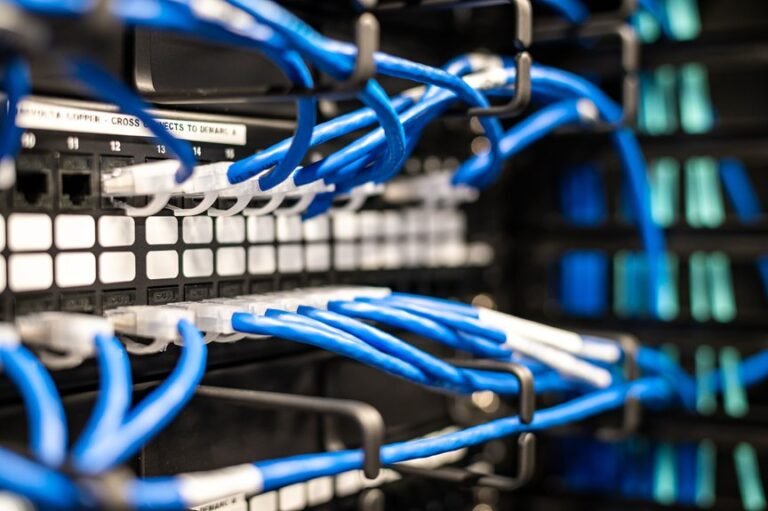
The 20.30.40.0/24 block represents a private address space used for internal network segmentation. Its purpose is to enable controlled testing, development, and deployment without public exposure. Subnetting within this range supports logical separation and tailored performance. Designing routing and access paths must be scalable and auditable. Practical implementation requires clear documentation and change control to avoid overlaps. The governance approach emphasizes standard handling and portability, leaving important decisions to be explored in the following sections.
What Is 20.30.40 Private Network IPs and Why They Matter
Private network IPs in the 20.30.40.0/24 range refer to a non-routable address block used within a private network to segment internal traffic. These addresses facilitate controlled experimentation and deployment without public exposure.
They raise privacy concerns by concentrating data paths and monitoring points. Policy implications emerge from access controls, auditability, and standardized handling across isolated environments, ensuring compliance and user autonomy.
Subnetting Demystified: How 20.30.40 Fits Into Private Ranges
Subnetting in the 20.30.40.0/24 space illustrates how a private range can be organized to support scalable network segmentation.
The discussion presents Subnetting strategies that partition the block into logical segments, aligning with size needs and performance goals.
Address allocation emphasizes orderly assignment, reuse avoidance, and clear metadata, enabling predictable growth without compromising security or control.
Routing and Access: Designing Scalable Paths for 20.30.40
Routing and access design for 20.30.40 focuses on constructing scalable paths that support efficient inter-network communication while maintaining security boundaries. The approach analyzes routing architectures, segmentation, and policy enforcement to minimize compliance gaps and prevent vendor lock in. It emphasizes modular, auditable designs, standardized protocols, and scalable peering strategies that adapt to evolving topologies without compromising performance or governance.
Practical Implementation: Step-by-Step Configuration and Common Pitfalls
For practitioners implementing private network IP configurations, a structured, step-by-step approach ensures reproducibility and minimizes misconfigurations. The process emphasizes documentation, baseline security, and repeatable testing. Common pitfalls include ambiguous addressing, overlapping subnets, and insufficient change control. Privacy auditing considerations and vendor lock in risk assessments should accompany design decisions, guiding unaffiliated tooling choices and ensuring portability across environments.
Frequently Asked Questions
Are 20.30.40 Private IPS Widely Supported by Vendors?
Yes, 20.30.40 private IPs have broad vendor support, though adoption varies. The approach emphasizes cross network compatibility, with standard routing and NAT support. Overall, vendor support is strong, enabling interoperable deployments across diverse networks and platforms.
Can 20.30.40 Cross Public Networks Without VPNS?
An example shows a remote site using MPTCP with direct public network traversal; however, cross-network access typically requires VPN alternatives. It does not reliably traverse, and VPNs or overlays remain standard for consistent reachability.
What Are Security Best Practices for 20.30.40 Usage?
Security best practices for 20.30.40 usage include rigorous security auditing and strict access control, ensuring continuous monitoring, least-privilege roles, encrypted communications, secure key management, anomaly detection, regular patching, and documented incident response to preserve freedom and resilience.
How Does 20.30.40 Interact With IPV6?
Ultimately, 20.30.40 interworks with IPv6 via dual-stack and translation approaches, enabling IPv6 interworking while preserving private routing semantics; private vs public routing influences exposure, policy, and NAT-like behavior within enterprise boundaries. Anachronistic compass remains optional.
Any Known Conflicts With Existing Private Ranges?
Potential conflicts with existing private ranges are low but possible due to conflicting allocations and overlapping subnets; careful subnet planning mitigates routing pitfalls. The 20.30.40/22 block generally stands separate, though misconfigurations can trigger unexpected reachability issues for freedom-seeking networks.
Conclusion
In summary, the 20.30.40 private network provides a controllable, non-routable space for internal experimentation and deployment, with clear benefits in segmentation and auditability. Subnetting within the block supports scalable, logical division aligned to performance and governance needs. Careful routing design and access controls enable isolated yet extensible communication across environments. Practitioners should adhere to documentation, baseline security, and change management to prevent overlaps and privacy concerns—a recipe that keeps systems robust and predictable, come hell or high water. tight as a drum.