

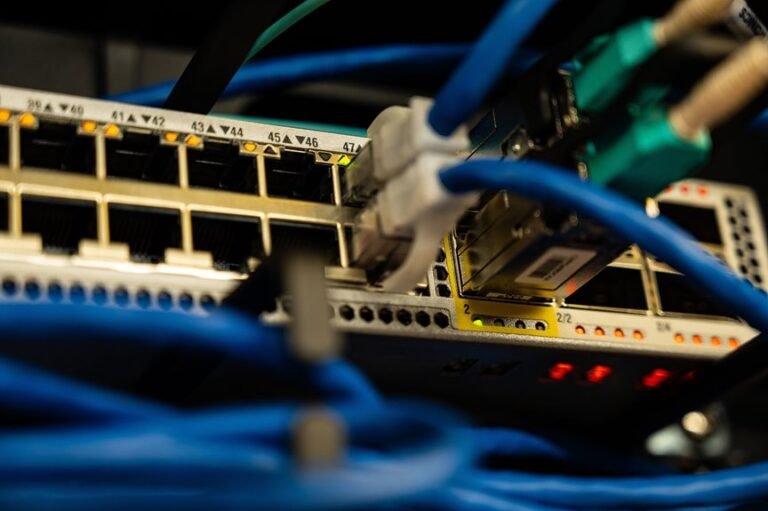
Incomplete router addresses undermine routing accuracy and network reliability. Causes include DHCP lease truncation, subnet mismatches, gateway omissions, manual entry errors, and conflicting static routes. A precise IP scheme must be verified, ensuring consistent addressing, reachable gateways, and proper subnet masks. The solution lies in refreshing DHCP and gateway configurations and correcting static routes, followed by disciplined addressing policies. Stakeholders are left with unresolved gaps and a need to audit configurations to prevent recurrence.
What Causes an Incomplete Router Address
An incomplete router address typically results when the device or network configuration fails to provide a full, valid IP address. Misconfigurations in DHCP leases, subnet mismatches, or gateway omissions can truncate addressing. Manual entry errors and conflicting static routes also contribute. The result is partial visibility, restricting routing decisions.
unrelated topic, snack ideas.
How to Confirm Your Network’s IP Scheme
Determining a network’s IP scheme involves a structured verification of addressing conventions, subnets, and gateway assignments across all devices. The process confirms consistent subnet masks, gateway reachability, and address allocation rules, spotting IP conflicts and misconfigurations. It also checks IPv6 drift indicators, such as unexpected prefix changes or route advertisements, ensuring alignment with documented network design and policy constraints.
Step-by-Step Resolve: Refreshing DHCP and Gateway Settings
Refreshing DHCP and gateway settings follows the verification of the network’s IP scheme by addressing common misconfigurations that affect address assignment and routing.
In step-by-step refinement, the process compares Networking basics with real-world scope: DHCP vs. static addresses, releases and renewals, gateway recalibration, and route checks.
Precision-oriented adjustments ensure reliable connectivity and freedom to configure future peers without ambiguity.
How to Prevent Incomplete Addresses in the Future
To prevent incomplete addresses from recurring, network administrators should implement rigorous DHCP discipline and robust address planning. The approach emphasizes deterministic scope, server authentication, and lease management. Implement continuous address reconciliation, automated reservations, and consistent subnetting policies. Two word idea1, two word idea2. Monitoring alerts, change control, and documentation reduce drift, while proactive audits ensure address integrity, capacity forecasting, and rapid remediation for future-proofed networks.
Frequently Asked Questions
Can an Incomplete Router Address Affect Devices on the Guest Network?
An incomplete router address can disrupt routing tables, causing incomplete routing for devices on the guest network and potentially broadening guest network impact through misrouted traffic or blocked gateway access.
Do MAC Address Changes Impact Router IP Allocation?
Changes to MAC addresses generally do not directly alter DHCP allocations, though they can influence device identification and lease timing on the network. Incomplete routing can cause parity mismatches; network parity depends on consistent addressing and proper router configuration.
How Often Should You Reboot a Router for Address Issues?
Reboot frequency depends on router model and ISP, but typically every 1–2 months or when issues arise; excessive rebooting is unnecessary. Consider stability checks and firmware updates to minimize guest network effects and ensure reliable address assignment.
Can IPV6 Influence Incomplete IPV4 Router Addresses?
Can IPv6 influence incomplete IPv4 router addresses, and if so, how? IPv6 routing can affect IPv4 paths via dual-stack dynamics; IPv4 fragmentation may occur when misaligned MTU handling exists, impacting reliability across heterogeneous networks and demanding careful topology alignment.
Do DNS Settings Cause Incomplete Router Address Errors?
DNS settings can cause incomplete router address errors, especially when resolution fails or cache stalls; unrelated networking misconfigurations may surface. Hardware compatibility gaps can amplify such issues, necessitating synchronized DNS, DHCP, and router firmware for reliable connectivity.
Conclusion
In a technical, detached cadence: The network finally learned to trust its own addresses, not the chaotic whims of manual meddling. Incomplete router addresses stood as absurd reminders that half-measures yield half routes. By reinforcing deterministic DHCP, validating subnets, and guaranteeing gateway reachability, the system achieved a satire of reliability: a flawless map in a world of misrouted parcels. The audience grasps that precision isn’t poetry—it’s the only sane protocol for routing sanity.