

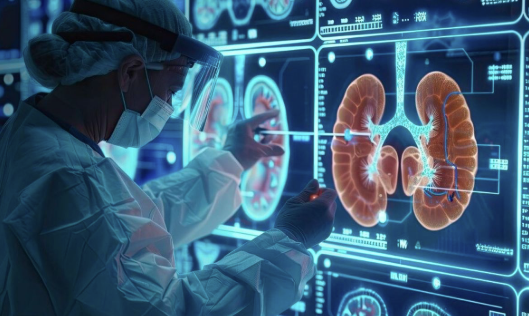
The integration of artificial intelligence in disease detection represents a significant advancement in healthcare technology. By employing sophisticated algorithms, AI can analyze vast amounts of medical data to identify patterns and anomalies. This enhances diagnostic precision and supports timely interventions. As healthcare continues to evolve, the implications of AI’s role in disease detection warrant further examination. What innovations lie ahead, and how will they transform patient care?
How AI Enhances Diagnostic Accuracy
As healthcare increasingly integrates advanced technologies, AI significantly enhances diagnostic accuracy by analyzing vast datasets with precision.
Machine learning algorithms identify patterns and correlations in complex medical information, facilitating timely and accurate diagnoses.
This data analysis empowers healthcare professionals to make informed decisions, ultimately improving patient outcomes.
The fusion of AI and diagnostic processes exemplifies a transformative shift towards a more efficient and effective healthcare system.
The Impact of AI on Disease Monitoring
The integration of AI in diagnostic processes sets the stage for significant advancements in disease monitoring.
By employing sophisticated data analysis techniques, healthcare providers can track disease progression and respond proactively.
Enhanced patient engagement tools enable individuals to participate actively in their health management, leading to improved outcomes.
As AI continues to evolve, its role in monitoring diseases will become increasingly essential.
See also: The Role of AI in Cybersecurity
Streamlining Healthcare Processes With AI
While traditional healthcare processes often involve lengthy procedures and manual interventions, AI technologies have emerged as a powerful tool for streamlining these operations.
By utilizing predictive analytics, healthcare providers can enhance patient management, optimizing resource allocation and reducing wait times.
This integration fosters a more efficient system, allowing healthcare professionals to focus on delivering quality care while minimizing administrative burdens.
Future Trends in AI-Driven Disease Detection
Emerging advancements in artificial intelligence are poised to revolutionize disease detection, enhancing diagnostic accuracy and speed.
Future trends will integrate machine learning algorithms with predictive analytics, enabling real-time disease risk assessment and personalized treatment plans.
These innovations promise to facilitate proactive healthcare interventions, improve patient outcomes, and ultimately promote a more efficient healthcare ecosystem, granting individuals greater autonomy in their health management.
Conclusion
Ironically, while AI’s capabilities promise unprecedented advancements in disease detection, the reliance on technology may overshadow the irreplaceable human touch in healthcare. As algorithms identify patterns and predict outcomes, one must ponder whether the essence of compassion and understanding in patient care will be compromised. In a world increasingly driven by data, the challenge remains to harmonize cutting-edge technology with the fundamental principles of empathy and connection that define effective healthcare.